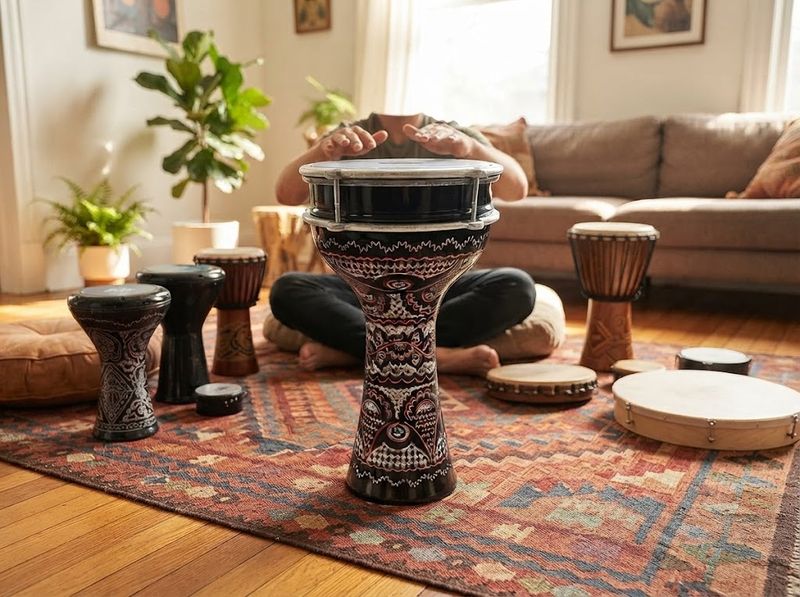
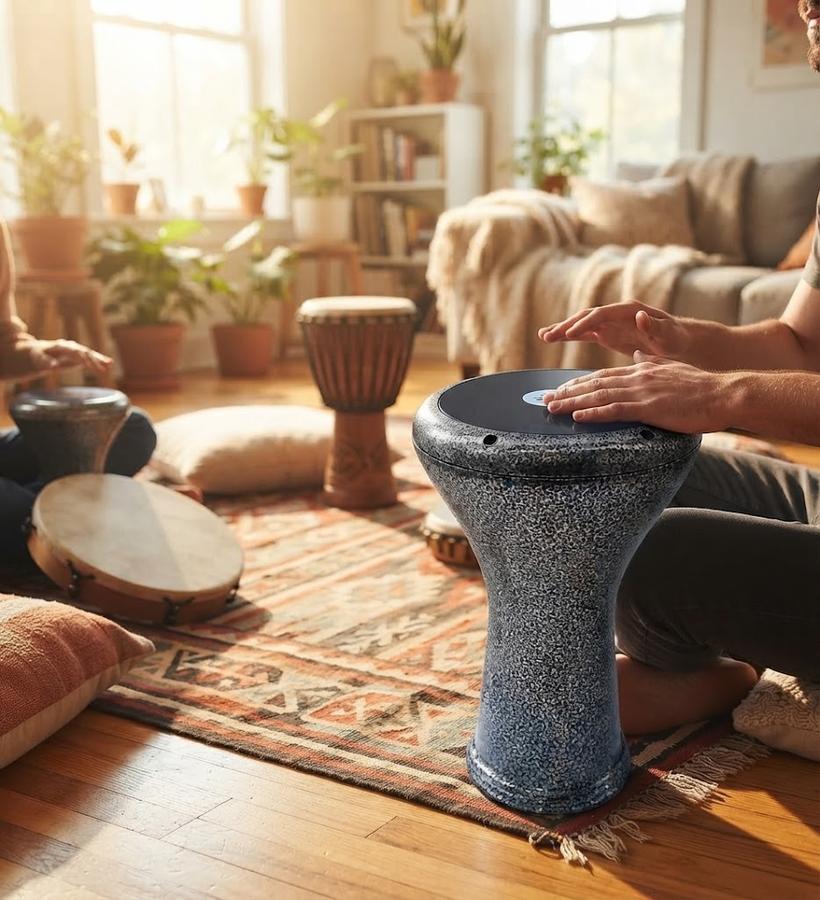
Zaza Percussion Darbukas, Djembes and Bansuri Flutes
Can't test a drum before it ships? Zaza Percussion darbukas hold a 4.1-star average across 400 verified buyer reviews on hand-engraved aluminum shells.
Hand-engraved aluminum shell, 5- to 8-bolt tunable head
Zaza Percussion darbukas earn their place on numbers you can check on delivery day: bolt count, head diameter, shipped weight.
4.1★weighted average rating
400verified buyer reviews
1.9–9.2 lbdarbuka weight span
5–8tuning bolts per head
01
Even the Pitch Out Before Your Coffee Cools
Seat the bundled Allen key on the first bolt, quarter-turn it, then work around the rim until a fresh drum sits in tune before your coffee cools.
02
The Shell 200 Buyers Have Already Rated
Read the 200 reviews left on the lightest Turkish darbuka before you commit; most hand-engraved workshop drums never gather that many.
03
Weigh the Drum Against Your Walk to the Circle
Hook the 1.9-lb engraved shell under one arm for the walk to a session and your other hand stays free. The Egyptian Classic weighs 9.2 lb and stays put on a stool through an hour of drills.
04
Skip the Retensioning Ritual Every Humid Week
Natural skin slackens the moment a garage warms up, and you retension it again mid-session. The synthetic head holds pitch through a damp August garage rehearsal with no re-seating.
05
First Doum Lands the Night the Box Opens
The case unzips, the tuning tool sits in a side pocket, and the head answers on the first stroke of the evening.
06
No Warranty Card, But a Return Window
No manufacturer warranty card rides in the box, so photograph the shell the day it lands and keep the receipt inside the case.
Darbukas, djembes, flutes and oud hardware
Zaza Percussion builds aluminum darbukas, rope-tuned djembes, a Tamil Nadu kanjira, bansuri flutes, and oud hardware, hand-finished rather than machine-pressed.
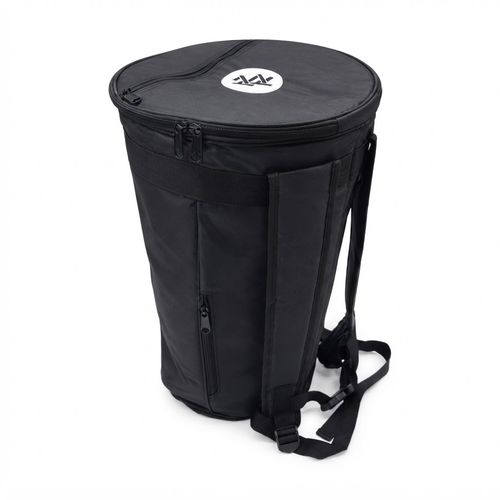
18-inch Padded Darbuka Gig Bag, Black
★ 3.9(37)
Slide a tall doumbek into the padded sleeve before the walk to a circle and the shell stops meeting doorframes. The bag stands 18 inches tall on a narrow base and opens to a 12-inch mouth, which is the shape a metal or mother-of-pearl drum actually takes. Nylon over foam absorbs the knocks that dent an aluminum rim in a car trunk. Where a shipping carton collapses after two outings, this sleeve keeps its shape across a season of park sessions. Cut for 17-inch to 17.5-inch metal shells and not for ceramic bodies, so measure your top diameter before the return window runs out.
Stands 18 inches tall with a 12-inch mouth that swallows a 17.5-inch metal doumbek whole
Padded nylon absorbs the trunk knocks that dent an unprotected aluminum rim
Cut for metal and mother-of-pearl shells, not for fragile ceramic bodies
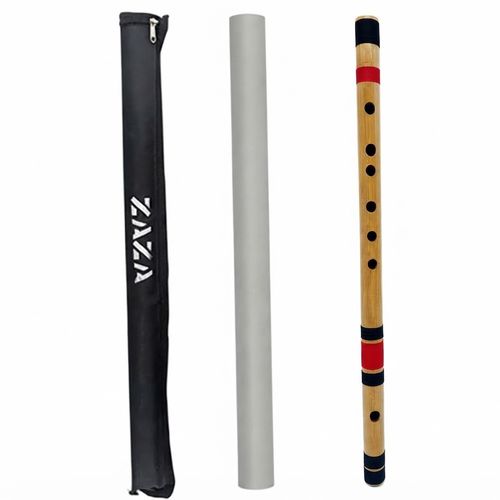
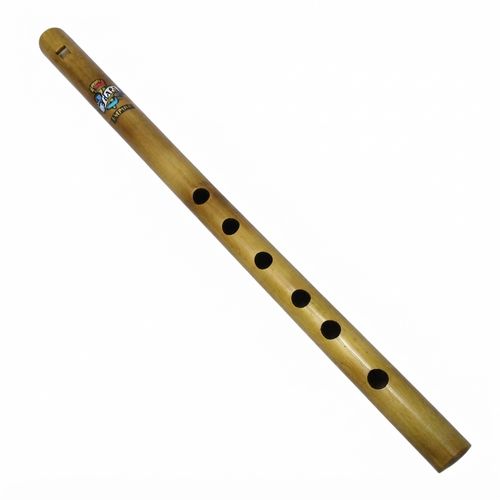
Cover the seventh hole on a 21-inch bamboo tube and the note that comes back sits in the low B register, where a bansuri earns its warmth. The bore is cut and tuned by hand, so finger spacing suits a full adult hand span instead of splitting the difference between two keys. Bamboo moves with the room: oil the inside every few weeks and a dry winter will not open a crack along the seam. Where a plastic beginner recorder gives one flat timbre, this flute answers breath pressure across the octave. Ships in a carry bag; check the tube for hairline splits on delivery day, inside the return window.
21 inches, 7 finger holes, key of B, sized for a full adult hand span
Each hole is cut to the finished tube, so pitch holds across the octave
Inspect the bamboo for hairline splits while the retailer return window is open
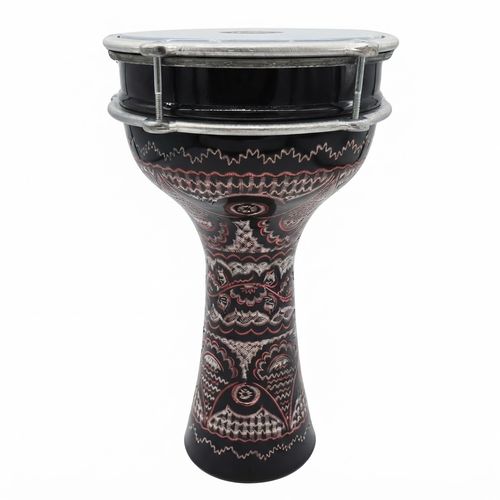
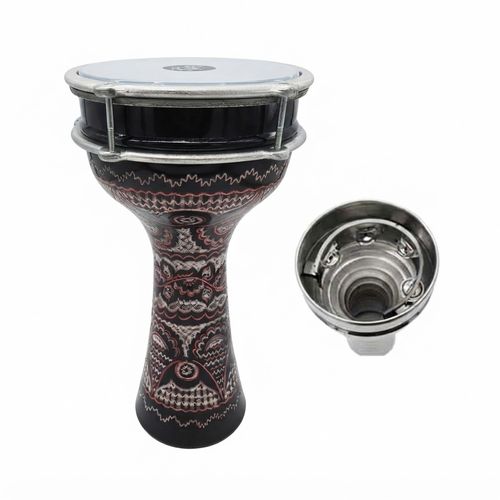
Sling a 1.9-lb aluminum shell over one shoulder and walk to a park circle without a second bag. The 8-inch tunable synthetic head tensions on 5 bolts, the shortest loop on offer here, so a beginner can hear one bolt change the pitch and learn to tune in a single evening. Turkish artisans cut the engraved band by hand, and the pattern breaks light unevenly under a lamp. Where a clay-bodied drum cracks on a cold drive, this cast body takes the knock and holds tune. Rated 4.3 stars across 200 verified buyer reviews. Check the shell for shipping dents the day it lands.
1.9 lb with an 8-inch head on 5 bolts, tuned end to end in one evening
The aluminum body reflects the stroke rather than absorbing it, pushing doum lows across a circle
4.3 stars across 200 verified buyer reviews, the most-rated drum on this page
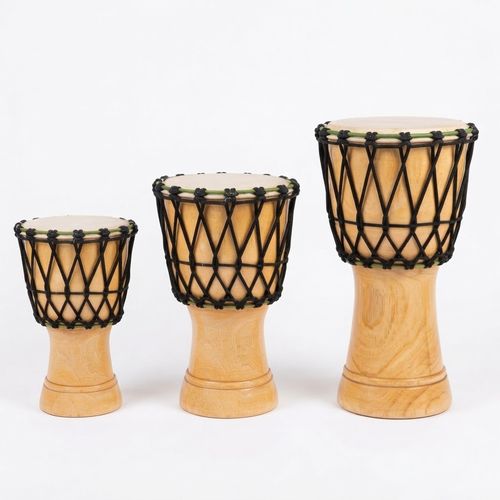
Strike a pre-stretched goatskin head and the tone lands without a break-in week, because the ropes arrive tensioned rather than slack. The bowl is carved from one solid piece of wood, so it rings as a single chamber instead of buzzing at a glued seam. Head diameters climb with the shell: roughly 6 lb at the compact end, about 12 lb in the middle, and near 18 lb for the floor drum that anchors an ensemble. Where a bolt-tuned drum needs a key, rope tension answers to your hands on the vertical cords. Natural skin reacts to humidity, so check tension before a session and use the return window if the head arrives loose.
Pick roughly 6 lb for practice or near 18 lb for the floor drum that anchors an ensemble
One-piece carved bowl rings as a single chamber, with no glued seam to buzz
Check rope tension on arrival, while the retailer return window is still open
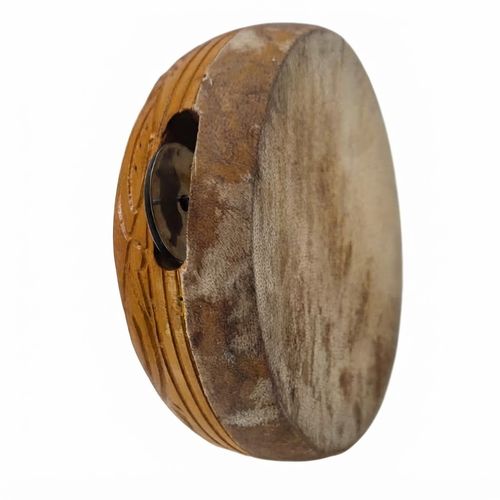
Drop a one-pound frame drum into a backpack side pocket and it weighs less than the water bottle beside it. The 7.5-inch solid wood frame is 3.75 deep and carries genuine goatskin and a single pair of zills, tuned to answer a fingertip rather than a full palm. Artisans in a small Tamil Nadu workshop build it for South Indian bhajan, ceremony, and meditation playing, so the finish reads hand-made rather than factory-smooth. Where a Western tambourine rattles at every angle, this head gives a bright, dry tone with jingles that stay out of the way. Buyers rate it 4.0 stars across 8 verified reviews; a carry bag ships in the box.
7.5-inch frame at 1 lb bare, 1.32 lb bagged, riding in a backpack pocket
One pair of zills keeps the jingle behind the head tone instead of over it
Hand-finished in a Tamil Nadu workshop, so expect grain and tool marks a factory tambourine hides
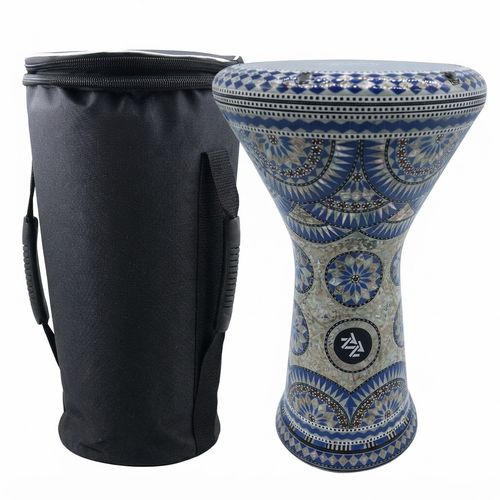
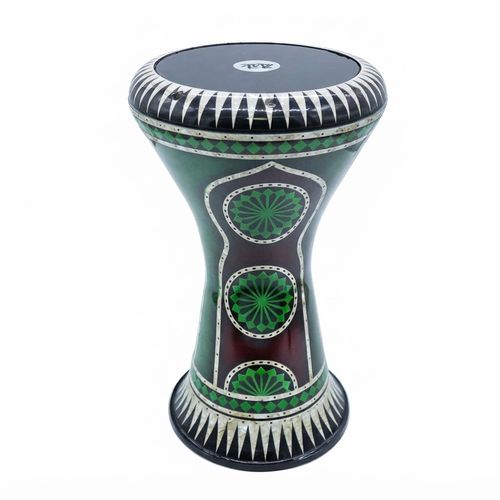
Set a mother-of-pearl shell on a side table and it reads as an object before it reads as a drum. Real pearl inlay is set piece by piece into an aluminum body built in Egypt, and the shiny pattern sits flush rather than printed on. The tunable synthetic head tensions on 6 bolts, and an extra clear skin plus a premium case ship alongside the tuning tool. Where a plain engraved shell wears its finish, inlay resists the scuffs of regular handling. Inlay is decoration, not voice: tone comes from the head and shell under it. Check the pearl work on arrival, inside the retailer return window.
8.75-inch head on 6 bolts, with a spare clear skin and premium case in the box
Pearl is set into the aluminum piece by piece, so the pattern sits flush under a fingertip
Inspect the inlay the day it lands, while the retailer return window is open
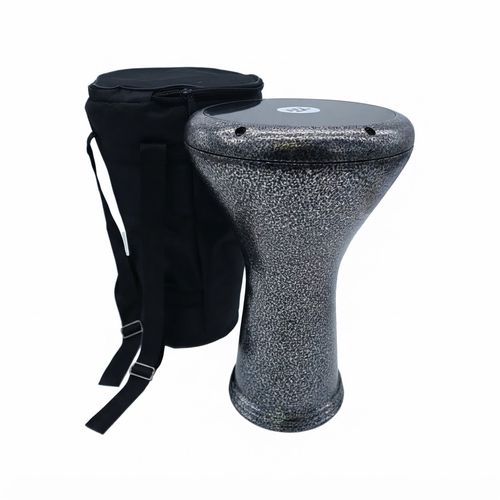
Set a 9.2-lb Egyptian shell between your knees and the 8.75-inch head pushes bass a lighter drum cannot reach. Six bolts ring a rim measuring 10.5 across, tapering to a narrower base, which is the geometry behind its wide doum and its ringing tek. An electrostatic metal finish over the aluminum resists the fingerprints that dull a polished shell within a month. Where most drums leave you hunting a replacement skin, a second matching head ships in the box with the tuning tool and a padded case. Rated 4.5 stars across 13 verified buyer reviews. Check head tension on arrival; some ship fully tightened.
9.2 lb with an 8.75-inch head on 6 bolts, played seated between the knees
A 10.5-inch rim tapering to a narrower base widens the doum and sharpens the tek
4.5 stars across 13 verified buyer reviews, with a spare head included
Shake a 2-lb engraved shell and the internal jingles answer before your hand reaches the head. No plain darbuka carries that tambourine layer. The tunable synthetic head tensions on 5 bolts with the bundled key, so the jingle rides under a tuned tone rather than a slack one. Turkish artisans hand-engrave the aluminum body, cut to travel rather than to sit on a stand. Where a separate frame drum means a second case, this one covers both jobs in a single shoulder carry. Rated 4.1 stars across 54 verified buyer reviews. Small hands suit it best; larger spans may prefer a wider Egyptian rim.
Internal jingles under a Turkish-size head on 5 bolts, at roughly 2 lb for the walk in
Jingles hang inside the shell, so they answer the stroke instead of ringing on their own
Covers drum and jingle in one carry, where a separate frame drum needs a second case
Pick the head diameter first on this one: the classic rim measures 8.75 in diameter for a sharp solo voice, while the Sombaty opens to 9 for deeper bass. Eight bolts ring the cast aluminum shell, and the drum weighs 7.6 lb bare or 8.6 lb in its bag. It spans 11 across the top and tapers toward the base. A padded case, tuning tool, and spare 8-bolt head ship with it. This drum rates 3.5 stars across 10 verified reviews, the lowest here; buyers report paint overspray and head collars that will not seat. Verify collar depth and finish on delivery day, inside the return window.
8 bolts on a 7.6-lb shell, with a classic solo rim or a deeper Sombaty rim
More bolts spread tension across a wider rim, which also means a longer tuning loop
Rated 3.5 stars across 10 reviews; check collar fit and finish while the return window is open
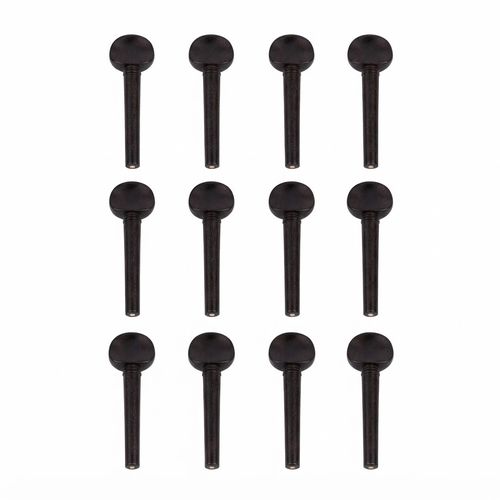
Pull a slipping peg from an oud pegbox and the replacement has to match the hole, not just the wood. This set of twelve ebony pegs measures 4.25 inches overall, with a 3.125-inch peg length and a 2.1875-inch taper running from 3/8 at the large end to 1/4 at the small end. Ebony holds a taper under string tension better than a soft hardwood, which is why a fitted peg stops creeping mid-session. Where a mixed bag of salvaged pegs gives you twelve slightly different tapers, this set arrives uniform. Measure your pegbox holes before ordering, and use the return window if the taper misses your instrument.
Twelve ebony pegs at 4.25 inches overall, tapering from 3/8 down to 1/4 at the small end
Ebony holds its taper under string tension, so a fitted peg stops creeping mid-session
Measure your pegbox holes first; the retailer return window covers a taper mismatch
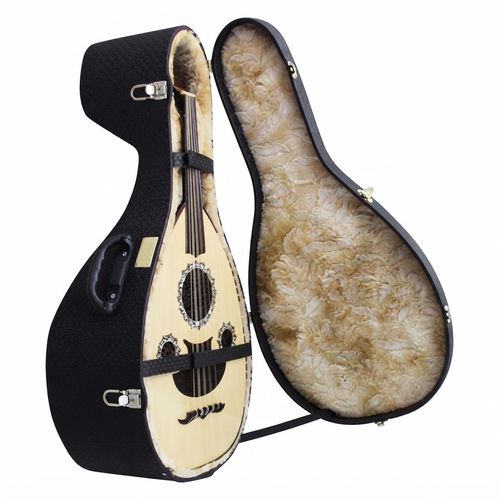
Measure a trunk before a gig and this case answers the question outright: 34 by 17 by 10 inches, 10.5 lb empty. Three reinforced layers wrap a plush interior, with three standard latches, one lockable latch, and two inner straps that stop the body sliding on a rough drive. Where a gig bag lets a bowl-back oud roll against a seat rail, a hard shell keeps the instrument seated whatever the road does. An accessory compartment takes strings and a spare set of pegs, so a second hardware bag stays home. Sized for Turkish and Arabic ouds; the case ships alone, with no instrument included.
34 x 17 x 10 inches at 10.5 lb, measured against a trunk before a gig
Two inner straps hold a bowl-back body still, where a soft bag lets it roll on a rough drive
Three reinforced layers and a lockable latch, against a gig bag's single foam wall
Blow across the embouchure of a 14-inch bamboo tube and the key-of-D note arrives on the first evening, which is the point of a six-hole beginner flute. Shorter spacing suits a smaller hand, so a teenager reaches every hole without stretching. Polished bamboo keeps the bore smooth, and the tone runs warm and low rather than shrill. Where a plastic recorder gives one fixed timbre, breath pressure moves this flute across its register. Thin bamboo splits in dry air: oil the bore before winter, and inspect the tube for cracks the day it lands. Entry-level pricing, so treat it as a first flute rather than a stage instrument.
14 inches, 6 finger holes, key of D, playing a first tune the evening it arrives
A polished bore keeps airflow smooth, so breath pressure alone moves the register
Thin bamboo can split in dry air; check the tube for cracks inside the return window
Zaza Percussion hand-engraves aluminum shells and bolts synthetic heads onto them: here is where each choice shows up in play.
Bring the Head Back to Pitch Between Two Songs
The Turkish darbuka tunes on exactly 5 bolts, and the Horizon shell locks down on 8. Turn the bundled Allen key a quarter-turn at each point, working around the rim in sequence, and the head answers evenly instead of choking on one over-tight bolt.
Turn one bolt at a time and the pitch climbs evenly; tighten opposite pairs at random and the head buzzes at the rim.
The engraved aluminum body projects doum lows because metal reflects the stroke rather than absorbing it the way a soft clay wall does.
Where a clay-ceramic drum cracks in a car trunk on a winter drive, the cast shell takes the knock and keeps its pitch.
Play the Same Drum in a Damp Garage and a Dry Kitchen
The 5-bolt synthetic head holds tension through humidity swings that leave natural skin slack by the second song. One first-time buyer picked the lightest Turkish shell for weekly drum-circle nights and reported it easy to carry and still in tune between sessions, where a natural-skin drum in the same rotation asks for re-seating before nearly every meet-up.
Leave the drum on a stand through a humid August week and the doum still lands where you left it.
The skin resists moisture because it never absorbed any to begin with, so no re-tensioning ritual opens each session.
Where goatskin slackens overnight in a heated apartment, this head holds tension until you decide to change it.
Each 16-inch engraved band on a Zaza Percussion shell comes off a hand tool, so no two drums leave the bench identical. Tilt a shell under a lamp and the pattern breaks light unevenly, because a hand tool never repeats a stroke the way a press does.
Run a fingernail across the engraved band and you feel depth changes a stamped pattern never carries.
Wipe the inlaid shell down after a session and the pearl does not lift at the edges, because each piece seats into the aluminum.
Where a machine-pressed souvenir drum repeats one motif on every unit, two engraved shells never match line for line.
Sling the 1.9-lb Turkish darbuka over a shoulder for the walk to a park circle. Set the 9.2-lb Egyptian Classic between your knees at home, where its wider Egyptian head pushes more bass into the room. Rope-tuned djembes climb from a compact 6-lb practice shell to an 18-lb floor drum for ensemble bass.
Carry the lightest shell up two flights of stairs and your forearm still works for the first hour of playing.
A wider head moves more air, so the deeper Sombaty rim drops the doum well below the solo-size drum.
Where a single-size starter drum forces one compromise, the djembe steps from a child-height practice shell to an ensemble bass.
Buyers describe the first tuning pass, the walk to the circle, and what they found in the box.
The 5-bolt head arrived a touch slack, so I worked the hex key round the rim twice before dinner and the doum settled where it should. Six weeks of Thursday circles later it has not moved.
★★★★★Marcus D.Verified Purchase · Hand-Engraved Aluminum Darbuka, Black
I walk eight blocks to the park with this one under my arm and my forearm still works when I sit down. The lightest shell cuts through five other drums without anything plugged in.
★★★★★Priya N.Verified Purchase · Aluminum Darbuka with Internal Jingles
Mine came with a dent along the lower cone. I photographed it the hour the box opened and sent it back inside the return window, and the replacement shell was clean. Check the finish on delivery day.
★★★★★Tom R.Verified Purchase · Horizon Solo Darbuka, Liquid Green
My daughter asked for a frame drum after one video. The kanjira weighs about a pound, lives in her backpack pocket, and she was holding a steady pattern inside two weeks.
★★★★★Elaine W.Verified Purchase · Kanjira Indian Frame Drum with Case
The Egyptian Classic sits between my knees for an hour of drills and never walks off the stool. The wider head drops the bass well under my smaller drum, and a spare skin rode in the same box.
★★★★★Yusuf A.Verified Purchase · Egyptian Classic Darbuka, Silver Body
Bamboo splits if you ignore it. I oiled the bore three times before the first winter, and the key-of-D flute has held together through eight months of dry apartment heat.
★★★★★Dana K.Verified Purchase · Bamboo Bansuri Flute, Key D
Our August rehearsals run in a garage with the door open. The goatskin drums in the room go slack by the second song; this synthetic head holds pitch and my re-tune takes two minutes.
★★★★★Ben O.Verified Purchase · Hand-Engraved Aluminum Darbuka, Black
The rope-tuned djembe took a full evening to pull up to pitch and it was worth the evening. The shell carries ensemble bass in a room of fifteen players without turning muddy.
Zaza Percussion prints bolt count, collar depth, and shipped weight on each spec sheet; you settle those numbers before ordering.
5 to 8 tuning bolts, model to model
Turn the Allen key around the rim and count the stops: the smaller Turkish head tensions on exactly 5 bolts, while the deeper Sombaty-style rim locks down on 8 evenly spaced points.
Scan any darbuka buying guide for 'tuning bolts' and you will not find the count that decides how long tuning takes.
Manufacturer spec, listing bullet points
16- to 22-inch djembe heads, roughly 6 lb to 18 lb
Rope-tension the smallest goatskin head and a practice djembe rides between your feet on a living-room floor. Step up to the floor shell for ensemble bass; the pre-stretched skin holds tone at both ends.
Open a darbuka guide and no djembe entry pairs head diameter with shipped weight, the two numbers that decide what you carry upstairs.
Manufacturer spec, listing bullet points
7.5-inch kanjira frame, 1 lb bare and 1.32 lb bagged
Slide the kanjira into a backpack side pocket between practice sessions. Bagged at 1.32 lb, it weighs less in your hand than a full water bottle.
Look for a kanjira in a darbuka buying guide and you come up empty, so nothing sits beside it for weight.
Manufacturer spec, listing bullet points
21-inch 7-hole flute in key B; 14-inch 6-hole in key D
Cover the sixth hole on the longer key-of-B bansuri and the low register drops where the shorter flute cannot follow. The shorter key-of-D flute suits a smaller hand span; hole count and key are fixed before the first breath.
Set a darbuka size chart next to a flute listing and hole count never appears on the same page.
Manufacturer spec, listing bullet points
34 x 17 x 10 inches, 10.5 lb, three reinforced layers
Measure the oud case against your trunk space before a gig. Three reinforced layers wrap the body, so a second hardware bag stays home on gig night.
Measure a gig-bag wall in a darbuka guide and you find no layer count at all, only the word padded.
Manufacturer spec, listing bullet points
1.9 lb to 9.2 lb across the darbukas
Lift the 1.9-lb engraved shell in one hand, then set the 9.2-lb Classic on a stool: the spread runs close to five to one. A ceramic drum at the same head diameter lands near the heavy end and cracks on the first drop off a chair.
Buying guides quote a weight bracket for the category, never the model-to-model spread you feel carrying one up a staircase.
Manufacturer spec, listing bullet points
4.1 stars across 400 verified buyer reviews
Four hundred buyers rated these drums after weeks of practice, not after one tap in a showroom. Sort the reviews low to high and the damage complaints sit in the same 4.1-star pool.
An unbranded workshop listing rarely gathers enough reviews to average across a whole range, so you end up comparing photos.
400 verified buyer reviews
The Brand Behind the Engraved Aluminum Shell
Zaza Percussion sells drums you cannot strike before they ship, so buyers judge a shell by what other players wrote after months of practice. Read both sides before you pick: the Turkish shell holds 4.3 stars across 200 players, the Horizon rim 3.5 across ten. The fears section below names which drum carries that gap, and which check you run in the first hour after delivery.
Open the case on the kitchen table: a hand-engraved aluminum shell, a synthetic head on its tuning bolts, and the Allen key that tensions it. Turkish benches cut the lighter shells; Egyptian workshops build the heavier Classic you settle between your knees for an hour of practice. A small Tamil Nadu workshop makes the kanjira, a one-pound frame you drop into a backpack pocket on the way out.
Djembes, bansuri flutes, and oud pegs ship from the same brand, so you order one box instead of chasing four specialist sellers. Check the shell for dents the day it lands: the retailer return window, not a manufacturer warranty, is what protects you.
Zaza Percussion darbukas arrive tuned by hand but shipped across an ocean; the steps below bring the head back to pitch.
1
Unbox and Inspect
Slide the drum out of its case. Run a thumb around the rim for dents before the return window shortens.
2
Seat the Head Flat
Check that the head sits level in its collar. A crooked rim reads as out of tune before you touch a bolt.
3
Work the Allen Key Around the Rim
Turn each of the 5 to 8 bolts a quarter-turn in sequence, checking pitch beside every one as you go.
4
Zip It Back for Travel
Drop the tuning tool into the case pocket and the drum rides upright in a car trunk to the next circle.
Day One to Year One on the Same Drum
Zaza Percussion darbukas ship with a padded case and tuning tool: here is what the first year with one actually looks like.
Day 1, on the kitchen table
Unzip the padded case and run a thumb around the rim for dents. Test the drum inside the retailer return window, because that check is the only protection on offer; no manufacturer warranty exists.
Week 1, at the practice chair
Turn the hex key a quarter-turn at each bolt, working around the rim until the doum lands the same from every angle.
Month 1, at the drum circle
The lightest shell rides on a shoulder strap to the park, and the tuning tool sits in the case pocket for a mid-session touch-up.
Year one, through a humid summer
Natural-skin drums in the circle go slack by August. This head holds its pitch, so your re-tune is a two-minute job instead of a re-seating.
Zaza Percussion buyers write the same opening line in review after review: my first darbuka, a new hobby at fifty, a gift.
The One Buying a First Darbuka off Other People's Comments
You have never held a goblet drum, and you spent two evenings reading what strangers wrote before adding one to a cart. Start on the lightest Turkish shell, the one you can tune the first night without help. Five bolts is the shortest tuning loop here, and you hear each one shift the pitch as you work round.
The Adult Picking Up a New Hobby at Fifty
A kanjira turned up in a video last month, and now it sits at the top of your list. The palm-sized frame weighs one pound, drops into a backpack pocket, and forgives a beginner's hand for the first month.
The Parent Buying for a Kid Who Asked Once
Your teenager mentioned a bamboo flute once at dinner, and you have circled it ever since. The 6-hole model in key D plays on the first evening, but oil the bore before a dry winter or the tube can split down the seam.
The Drum-Circle Regular Who Carries Everything Two Blocks
Park sessions punish heavy gear, and this one rides light for the two blocks in. The hex key stays in the side pocket, so you retension between songs without unpacking the case.
Where this brand is the wrong answer
Skip this brand if you need a manufacturer-backed warranty for a touring instrument: the listings publish none, and a return window measured in days is the only cover.
Not the right fit if you chase a natural-skin voice: the synthetic head trades some warmth for pitch that holds through a humid week.
Look elsewhere if you play a ceramic body: the standalone gig bag is cut for metal shells and will crack a clay drum on the first knock.
Why the Shells Are Still Cut by Hand
Zaza Percussion bets on artisan benches and synthetic heads so a first-time player tunes a drum at home in one sitting.
Artisan Benches Over Press Lines
Order two of the same engraved shell and you receive two different drums, because a bench worker cuts each band by hand.
Playable Out of the Case
A tunable head and a hex key put your first tuning at about ten minutes on the kitchen table, not a trip to a drum tech.
Say the Weak Spot Out Loud
Read the 13 reviews on the Egyptian Classic before you buy: the damage complaints stay on the page instead of vanishing into a highlight reel.
One Storefront for a First Collection
Add a 1 lb kanjira to a darbuka order and both land in one delivery, from one brand, with one return window to watch.
What Buyers Flag Before They Click
Zaza Percussion's one-star reviews repeat the same four worries: a dented shell, wet-smelling paint, a collar that will not seat, a head sitting crooked on arrival.
The Box Arrives Fine and the Drum Does Not
3.9 to 4.3 stars across the aluminum darbukas, with damage-on-arrival the most repeated one-star theme
One buyer opened an undamaged shipping carton and found the shell dented, bent, and flaking paint, packed that way before it ever left. Check the rim and the finish the same day the box lands. The return window starts on the delivery date, so count your days from the doorstep, not from your first practice session.
Fresh Paint You Can Smell Under Your Arm
A darbuka is played clamped against your ribs, and one buyer described a spray-paint smell strong enough to spoil that grip. Air the drum in a ventilated room for a day before judging the finish. Press a thumb to the shell after that day of airing: a coat still tacky is a return-window question, not a break-in period.
Three-Eighths or Half-Inch: the Collar Nobody Names
3.5 stars across 10 verified reviews on the Horizon line, the lowest-rated darbuka here
Replacement heads for the Horizon rim come in two collar depths, and one buyer received the wrong one on both drums of a repeat order. Measure the collar on your existing head before ordering a spare. Head diameter alone will not seat a skin; run a caliper across the collar lip and write the depth on the case tag.
Stop Blaming the Drum for a Crooked Rim
A head seated unevenly in its collar reads as a bad instrument on the very first stroke, and one buyer concluded exactly that before checking. Loosen every bolt, re-seat the skin flat, then tension in sequence around the rim. Work around the rim twice and most out-of-tune arrivals come good inside a single evening.
No Warranty Card in the Box
Zaza Percussion publishes no manufacturer warranty, so the retailer return window is the only cover you hold on day one. One buyer found the drum delivered on the same date the window closed. Unpack the drum the hour it arrives and photograph any dent, because next weekend may already sit outside the window.
Park benches, kitchen tables and practice chairs: where these shells actually get played.
The padded bag, packed for the walk outBansuri in key B, between practice runsEngraved Turkish shell, ready for a circleRope-tuned djembe, set for floor bassThe kanjira, straight out of a backpack pocketMother of pearl inlay under a windowThe Egyptian Classic, settled for an hour of drillsJingle darbuka waiting on the bench
Tuning, collars and what the return window covers
Bolt counts, collar depths and delivery-day checks, answered before you commit to a shell.
Are darbuka and doumbek the same instrument?
Same goblet drum, different regional name. Darbuka is Turkish and Levantine, doumbek is the common English transliteration, tabla is the Egyptian word. Shell material, head type, and bolt count decide the sound. The name decides nothing.
What is Zaza Percussion?
Zaza Percussion is a private-label world-percussion brand selling hand-engraved aluminum darbukas, rope-tuned goatskin djembes, a South Indian kanjira frame drum, bansuri bamboo flutes, and oud hardware. Its darbukas hold a 4.1-star weighted average across 400 verified buyer reviews. Turkish and Egyptian workshops build the aluminum shells; a Tamil Nadu workshop makes the kanjira.
Which instrument families does the brand actually cover?
The brand sells through one official online storefront, and every product link on this page points at the live listing so pricing and stock stay current instead of going stale on a static page. Click through to check today's price on the drum you want. Once it arrives, confirm the exact return-window date on your order page before you tune the head, because that window is the only protection on offer: no manufacturer warranty is published on any listing in this range.
Which is easier for a beginner, a darbuka or a doumbek?
Naming changes nothing about difficulty, because both words describe the same drum. What does change difficulty is construction. An aluminum shell with a tunable synthetic head gives the most forgiving, most consistent tone for a first-time player, since it does not slacken with humidity and it re-tunes with a hex key rather than heat and hand pressure.
What size darbuka should I choose: Solo, Sombaty, or Dohola?
Solo sizing runs around a compact solo-size head and suits one-hand grip and lead playing. Sombaty opens to roughly 9 inches and drops the doum into deeper bass territory. Dohola sits wider still and anchors the low end in an ensemble. The Horizon shell ships in both a classic solo rim and a Sombaty rim, so read the variant before ordering.
What is the difference between Turkish and Egyptian darbuka styles?
Turkish rims sit flatter and leave the head edge exposed, which suits fast finger rolls and snaps. The rounded Egyptian rim protects your fingers and gives a warmer, more forgiving tone. The engraved aluminum shells here come from Turkish workshops; the Classic and mother-of-pearl drums come from Egypt. Both use the same bolt-tensioned synthetic head.
Can a beginner learn doum-tek-ka strokes on an aluminum shell?
Aluminum with a synthetic head is the usual beginner recommendation precisely because it holds pitch between sessions. Doum lands in the centre, tek and ka snap off the rim edge, and a stable head means the stroke you practised last week answers the same way today. Natural skin shifts with the weather and hides your progress behind retuning.
Is there a manufacturer warranty?
No manufacturer warranty is published on any darbuka listing; the warranty field on the listings reads 'No.' The retailer return window is your only protection, and it can be short. One buyer found a drum delivered on the very same date the window closed. That left no play-test time at all. Inspect the shell for dents, check the finish for tackiness, and confirm the head seats flat in its collar on the day the box arrives, not the following weekend. Photograph anything questionable before you tune it.
What should I do if the drum arrives dented?
Photograph the damage and open a return the same day. One buyer received a shell dented, bent, and flaking paint inside a shipping carton that was itself undamaged, which means the drum left the workshop that way rather than taking a knock in transit. Damage on arrival is the most repeated one-star theme across the engraved shells. Because the return window runs from the delivery date rather than from your first practice session, the unboxing inspection matters more here than the play test that follows it.
How long is the return window?
The window is set by the retailer, not by the brand, and typically runs about a month from delivery on standard orders. It can be shorter on some listings: one buyer reported a drum arriving on the same date their window expired. Check the exact date on your order page the day the parcel lands.
Are the review counts and star ratings genuine?
Ratings shown here come from verified purchase reviews on the retail listings and aggregate to 4.1 stars across 400 reviews. Individual drums vary widely: the Turkish shell holds 4.3 across 200 reviews, the Horizon sits at 3.5 across 10, and the mother-of-pearl drum has no reviews yet. Read the per-drum figure rather than the brand average.
Where can I buy Zaza Percussion instruments?
The brand sells through one official online storefront, and every product link on this page points at the live listing so pricing and stock stay current instead of going stale on a static page. Click through to check today's price on the drum you want. Once it arrives, confirm the exact return-window date on your order page before you tune the head, because that window is the only protection on offer: no manufacturer warranty is published on any listing in this range.
Why do some models show almost no reviews?
Two listings are new or low-volume: the mother-of-pearl darbuka and the deluxe oud hard case carry no reviews yet, and the djembe has only a handful. A thin review count is not evidence of a problem, but it does mean no independent play-testing exists. Weight your decision toward the drums with a longer feedback record.
Is the Horizon darbuka a safe pick?
It sits at 3.5 stars across 10 verified reviews, the lowest figure here, and the complaints repeat: paint overspray, heads that will not seat, and a missing tuning key. Buyers also report a mismatch between 3/8 and 1/2 head collars on the Sombaty rim. If you want that Sombaty bass, inspect the drum immediately on delivery.
Are these instruments handmade or factory-produced?
Shells are engraved and finished by hand in artisan workshops, which is exactly why finish quality varies between units. One kanjira buyer described the build as rough compared with a factory-made Western tambourine, while another called the same drum well made. Hand-finishing buys you character and tool marks, not machine consistency.
How many tuning bolts does each darbuka have?
Bolt count runs from 5 to 8 depending on the drum. The engraved 16-inch Turkish shells tension on 5 bolts, the 17-inch Egyptian Classic and the mother-of-pearl model use 6, and the Horizon shell rings its rim with 8. Fewer bolts means a shorter tuning loop; more bolts spread tension more finely across a wider head.
How much do these darbukas weigh?
The engraved Turkish shell is the lightest at 1.9 lb, the jingle version sits near 2 lb, the Horizon comes in at 7.6 lb bare or 8.6 lb bagged, and the Egyptian Classic tops out at 9.2 lb. Weight climbs with head diameter and shell wall thickness.
What head diameters do the drums use?
Darbuka heads run 8 inches on the Turkish shells and 8.75 on the Egyptian Classic and mother-of-pearl models. The Horizon ships either a classic solo rim or a deeper Sombaty rim. Djembe heads step up in three stages to a full floor-drum diameter, and the kanjira uses a 7.5-inch wooden frame under genuine goatskin.
Are the drumheads synthetic or natural skin?
Every darbuka here uses a tunable synthetic head, which is why humidity swings do not slacken it. The djembe and the kanjira use genuine goatskin, chosen for the warmer natural voice those instruments are built around. Goatskin reacts to room conditions and needs a tension check before a session; the synthetic skin does not.
What ships in the box with a darbuka?
A padded carrying case and a tuning tool ship with most darbukas. The Egyptian Classic adds a second matching head, and the Horizon includes a spare 8-bolt head as well. One buyer reported a Horizon drum arriving without the advertised tuning key, so check the case pockets before the return window closes.
Does the mother-of-pearl inlay change the sound?
Inlay is decoration. Voice comes from the aluminum shell and the synthetic head on 6 bolts above it, so this drum sounds like any other shell of that geometry. Buy the pearl work for how it looks.
What sizes and weights does the djembe come in?
Three shell heights carry three head diameters: a compact shell at roughly 6 lb, a mid-height drum near 12 lb, and a floor-standing model close to 18 lb with a 12-inch head. All three are carved from a single piece of wood and rope-tuned with pre-stretched nylon, so they arrive playable rather than slack.
How big is the kanjira and what does it weigh?
Solid wood frame, 7.5 across and 3.75 deep, carrying goatskin and one pair of zills. It weighs 1 lb bare, 1.32 lb inside its travel bag, and slips into a backpack side pocket.
What key and hole count do the bamboo flutes use?
Two flutes, two hand spans. The 21-inch bansuri carries 7 finger holes in key B for a deeper low register and an adult reach. The 14-inch model carries 6 holes in key D and suits a smaller hand or a first-time player. Key and hole count are cut into the tube and cannot be changed later.
What are the oud hard case dimensions?
Outside measurements run 34 by 17 by 10 inches, and the empty case weighs 10.5 lb. Three reinforced layers wrap a plush interior with two inner straps, three standard latches, and one lockable latch. An accessory compartment holds strings and spare pegs. Measure your trunk before a gig, because a hard shell does not compress.
What size are the ebony oud pegs?
Each peg runs 4.25 overall, with a 3.125 peg length and a 2.1875 taper narrowing from 3/8 at the large end to 1/4 at the small end. Twelve ship in the set. Measure your pegbox holes first.
Where are these instruments built?
Turkish artisan workshops cut and engrave the lighter aluminum shells. Egyptian workshops build the Egyptian Classic and the mother-of-pearl drum. A small workshop in Tamil Nadu, South India makes the kanjira by hand, and the bansuri flutes are tuned by Indian flute makers. Each shell is finished by hand, so engraved patterns never match exactly.
What tool do I need to tune a darbuka?
A small Allen key, commonly 4 to 5 mm, ships in the case with most drums here. It turns the ring of bolts around the head. Keep it in the case side pocket for mid-session touch-ups.
How do I tune a darbuka evenly all the way around?
Work bolt by bolt in sequence around the circumference, a quarter-turn at a time, tapping the head beside each bolt before moving on to the next one. Tightening opposite pairs at random pulls the skin off centre and leaves the rim buzzing on every tek. On a 5-bolt Turkish shell the full loop takes a couple of minutes; on an 8-bolt rim, allow longer and expect two passes. If one spot stays dull, loosen that bolt and re-seat the skin under it before tightening again.
Why does my darbuka buzz or sound uneven?
Uneven bolt tension is the usual cause, and a head seated crooked in its collar is the second. Loosen every bolt, lift the skin, re-seat it flat against the rim, then tension in sequence around the circumference. One buyer wrote off a drum as out of tune before noticing the rim sat crooked out of the box.
Does the padded case fit in a car trunk or an overhead bin?
The darbuka gig bag stands 18 inches tall with a 12-inch mouth, so it lies flat in a car trunk with room for a folding stand beside it. Overhead-bin fit depends on the airline and the drum inside it. Measure your drum's top diameter against that opening before travelling.
How should I store a darbuka between sessions?
Slacken the head about a quarter-turn per bolt if the drum is going away for months, then store it upright in its padded case away from a radiator or a sunny window. Standing it on a hard floor rim-down invites a dent. Aluminum shells tolerate cold better than clay, but sudden temperature swings still stress a tensioned skin.
Can I play these drums outdoors in humid or cold weather?
Synthetic heads are built for exactly that. They hold tension through the humidity swings that leave a natural skin slack by the second song, so a damp park circle or a cold garage rehearsal does not cost you a retune. The goatskin djembe and kanjira are the exception; check their tension before playing outdoors.
Is the kanjira's goatskin head durable enough for daily practice?
Goatskin on a palm-sized frame handles daily fingertip playing well, but it responds to room humidity the way every natural skin does. Traditional players dampen the skin lightly to drop the pitch, then let it dry back. Expect the tone to shift between a dry winter room and a humid summer one rather than staying fixed.
How do I keep a bamboo flute from cracking?
Oil the bore, not just the outside, every few weeks with a tung or teak oil blend, and let the flute dry fully after each session before it goes back in the bag. Thin bamboo splits when a heated indoor room pulls moisture out fast. One buyer's flute cracked from the mouthpiece down within a week of dry-season play.
Aluminum or clay darbuka: which should a first-time buyer pick?
Clay and ceramic bodies give a warmer, more traditional voice, and they crack when a car trunk lid closes on them or a cold drive chills the shell. Aluminum trades a little of that warmth for a body that survives transport and a synthetic head that stays where you tuned it through humidity swings. One buyer here explicitly preferred a clay-brand drum at similar money, so the trade is real. For a first drum that travels to circles and lessons, aluminum remains the lower-risk choice.
How does this brand compare with Gawharet El Fan?
Gawharet El Fan is the Egyptian benchmark most comparisons name, and one buyer here said outright they would pick a Gawharet drum over the Horizon at similar money. The aluminum shells here compete on bundle and weight: a case and tuning tool ship in the box, and the lightest shell is 1.9 lb. Neither brand publishes a consumer warranty.
Synthetic or natural-skin drumhead: which is better?
Natural skin carries the traditional voice and rewards a player who already knows how to manage it with heat and moisture. Synthetic skin holds pitch across weather changes and re-tunes in minutes with a hex key. Beginners are steered toward synthetic for that reason, and every darbuka here ships with one already fitted.
Which projects louder, a metal darbuka or a clay one?
Metal wins on projection. The aluminum wall reflects the stroke where a soft clay body absorbs it, so the lightest engraved shell cuts through six other drums unamplified. Clay sounds warmer up close and vanishes in a crowd.
Darbuka or djembe for a first hand drum?
A darbuka is played clamped under one arm or across a thigh, weighs as little as 1.9 lb, and tunes with a hex key in minutes. A djembe is a floor drum, runs from roughly 6 lb up to 18 lb, and tunes by pulling rope. Pick the darbuka for travel and the djembe for a room you play in.
How do I know when a drumhead needs replacing?
Persistent buzzing after a full even retune, a visible tear or crease, or a head that will not hold tension overnight all point to replacement. On the Egyptian Classic and the Horizon a spare head already ships in the box, so the swap costs you nothing but the ten minutes it takes to re-seat and tension it.
Will a replacement drumhead fit any darbuka?
Replacement skins are cut to a specific head diameter and bolt count, so match both before ordering. Collar depth matters too: buyers on the Sombaty Horizon rim have received 3/8 collars where a 1/2 collar was needed, twice on the same order. Measure the collar on your existing head, not just the rim across.
How much maintenance does an aluminum darbuka need compared with a wood djembe?
The aluminum shell asks for a wipe-down and an occasional bolt check, and its synthetic head can sit for months without attention. The wood djembe needs rope tension checked before sessions, a shell kept away from direct heat, and goatskin protected from damp storage. Roughly speaking, one is a hex key, the other is a habit.
What if a case strap or zipper fails?
One buyer reported the backpack straps tearing away from the base of a darbuka bag soon after delivery and simply bought a replacement bag. If it fails inside the retailer return window, return the bundle rather than the strap. Outside the window, the standalone 18-inch gig bag is sold separately and fits metal shells up to 17.5 inches.
Do the oud pegs and hard case fit other brands' ouds?
The hard case is built for Turkish and Arabic ouds generally, not for one brand's body shape, and its hard shell runs 34 by 17 by 10 under three reinforced layers. The ebony pegs fit by taper and diameter, running 3/8 at the large end to 1/4 at the small end. Measure your pegbox before ordering either.
Still deciding? Compare the lightest Turkish shell against the Egyptian Classic — see both spec sheets.
Get the Sizing Numbers Before You Pick
Head diameters, bolt counts, and shipped weights for every drum on this page, plus a note when a new model lands.
No spam. Unsubscribe anytime.
Sorry, something went wrong — newsletter signup is not working right now. Please try again later.
Cookies keep your preferences between visits. Privacy Policy